
GDPR Compliance Failure: How Delta Lake Time Travel Can Expose Deleted Data

Ready to transform your data strategy with cutting-edge solutions?
- Why DELETE isn’t enough under GDPR, and how Time Travel can make sensitive data reappear unless VACUUM is used correctly.
While preparing for the Databricks Data Engineer Professional Certification and exploring Delta Lake operations, I came across a real-world scenario that completely shifted my understanding of what “deleting data” actually means.
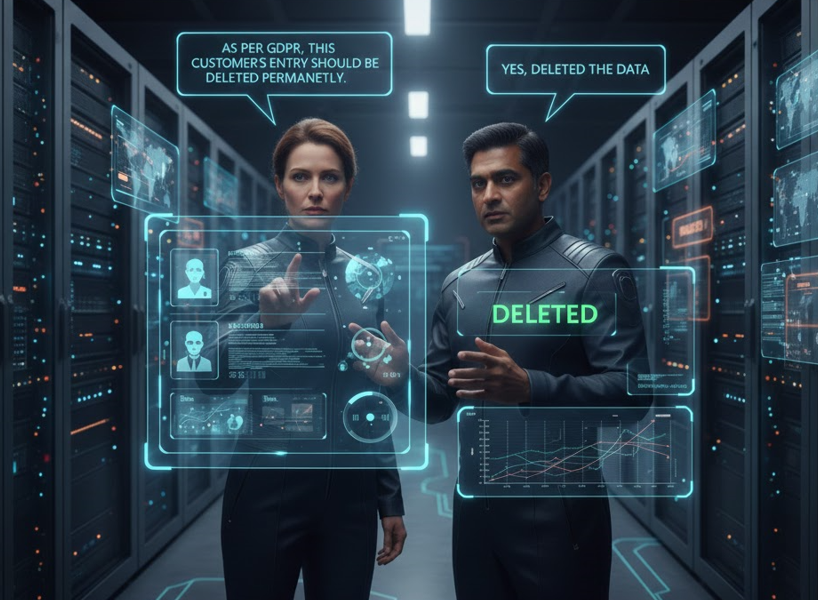
This wasn’t just another certification topic to memorize. It was a €20 million lesson hidden in plain sight.
The Context: Where This Happens
I explored use cases from domains like retail, CPG (Consumer Packaged Goods), and healthcare, industries where sensitive customer data isn’t just important, it’s legally protected.
Think about:
- Retail: Customer purchase history, payment details, addresses
- Healthcare: Patient records, medical history, insurance information
- CPG: Consumer preferences, loyalty program data, contact information
In all these scenarios, one thing is common: customers have the right to ask for their data to be permanently deleted.
The Discovery: “The Time Travel Compliance Failure”
I came across a scenario called “The Time Travel Compliance Failure”, and it had nothing to do with sci-fi.
The core issue? When a customer requests deletion of their personal data, and the team uses Databricks with Delta tables, something critical can go wrong.
Let me explain what I learned.
What GDPR Actually Requires
Before diving into the technical details, I had to understand the legal side. Under GDPR (General Data Protection Regulation), organizations must:
✅ Delete personal data permanently and irreversibly
✅ Do it without undue delay (typically within 30 days)
✅ Ensure it cannot be recovered by any technical means
This is not optional. Failing to comply can result in fines up to:
- 4% of global annual revenue
Whichever is higher.
Suddenly, understanding how Delta Lake handles deletions became much more than just a certification question.
The Scenario: What Actually Happened
The Customer Request -
A customer exercises their GDPR right and requests: “Delete all my personal information from your systems.”
What the Engineering Team Did
A compliance team member executes the deletion:
DELETE FROM users WHERE user_id = '12345';
Result: ✅ “1 row deleted successfully”
The engineer verifies:
SELECT * FROM users WHERE user_id = '12345';
Result: No records found. ✅
Everything looks perfect. The data is “deleted.”
The Audit: When Everything Unraveled
A few days later, compliance auditing begins.
The auditor, understanding Delta Lake’s capabilities, runs this query:
SELECT * FROM users TIMESTAMP AS OF '2024-09-09';
Why September 9th specifically? The auditor was checking data from 3 days ago, before the deletion request was processed on September 10th. They wanted to verify that deleted data wasn’t just hidden in the current version, but truly inaccessible from all versions.
The result?
The screen fills with data.
User ID 12345. Name. Email address. Phone number. Home address. Purchase history.
All the “deleted” personal information appeared. 😱
Why This Happened: Understanding Delta Lake Versioning
This is where my certification study became eye-opening. I learned that when you execute a DELETE command in Delta Lake, here’s what actually happens:
The DELETE Command Reality
DELETE FROM users WHERE user_id = '12345';
What the team thought happened:
- Data permanently removed from storage ❌
What actually happened:
- Data deleted from current version ✅
- Underlying Parquet files remain physically intact in cloud storage
- Delta Lake’s transaction log records the deletion
- Previous versions still point to the original data files
This is by design. Delta Lake maintains version history to enable powerful features like:
- Recovering from accidental deletions
- Auditing data changes over time
- Time travel queries for analysis
- Reproducing past datasets
But here’s the problem: This feature that makes Delta Lake so powerful is the exact reason the deleted data was still accessible.
The VACUUM Command: Delta Lake’s Cleanup Mechanism
I discovered that Delta Lake has a command specifically for physically deleting old data files: VACUUM.
Understanding VACUUM
The VACUUM command:
- Identifies Parquet files no longer referenced by recent versions
- Physically deletes these files from cloud storage
- Makes old versions inaccessible via time travel
Sounds like the perfect solution for GDPR compliance, right?
Time Travel Limitations: The 7-Day Retention Default
Here’s where I learned about the hidden trap.
VACUUM has a default retention period of 7 days.
This means:
- Even after running VACUUM, deleted data files are retained for 7 days
- For those 7 days, time travel queries can still access the “deleted” data
- Your compliance team believes the data is gone, but it’s still fully recoverable
Let me show you what this looks like in practice:
GDPR and Time Travel: The Problem
Here’s the exact scenario from my certification study:
The Problem Timeline:
September 10th - Deletion Executed:
-- User requests data deletion (GDPR requirement)

DELETE  FROM users WHERE user_id = '12345';
Data deleted from current version ✅
Current version check:
SELECT * FROM users WHERE user_id = '12345';
Returns: 0 rows ✅
Everything seems fine.
But the default VACUUM retention is 7 days.
For the next 7 days, this happens:
-- Auditor checks historical data from September 9th

SELECT * FROM users TIMESTAMP  AS OF '2024-09-09'

WHERE user_id = '12345';
Result: ❌ Deleted user data appears!
GDPR violation! ❌
The data was supposed to be permanently and irreversibly deleted. Instead, it’s still sitting in cloud storage, fully accessible to anyone who knows how to use Delta Lake’s time travel feature.
The Solution: Proper GDPR Deletion Workflow
After understanding the problem, I learned the correct approach:
Step 1: Delete the Data
DELETE FROM users WHERE user_id = '12345';
Step 2: Immediately VACUUM with 0 Retention
VACUUM users RETAIN 0 HOURS;
Now the verification:
-- Try to access historical data

SELECT * FROM users TIMESTAMP  AS OF '2024-09-09'

WHERE user_id = '12345';
Result: ✅ Returns nothing (files purged permanently)
This two-step process ensures:
- ✅ Data deleted from the current version
- ✅ Physical files removed from cloud storage immediately
- ✅ Time travel cannot recover the deleted data
- ✅ GDPR compliance achieved
Key Takeaways from This Real-World Use Case
There isn’t a single universal solution to this problem. Different organizations may adopt different approaches depending on their governance policies, compliance frameworks, and risk tolerance. But what matters most is awareness, the right process, and proactive governance.
You Might Also Like
Discover why Claude says "Usage Limit Reached" and how to actually fix it. Learn the difference between rolling session limits, fixed weekly caps, and how >150k context sizes silently drain your allowance.
Discover how Databricks Genie Code replaces reactive coding assistants with autonomous, multi-step data engineering execution. This guide covers Lakeflow pipeline monitoring, strict Unity Catalog governance, and the new 150 free DBU/month tier for data teams.
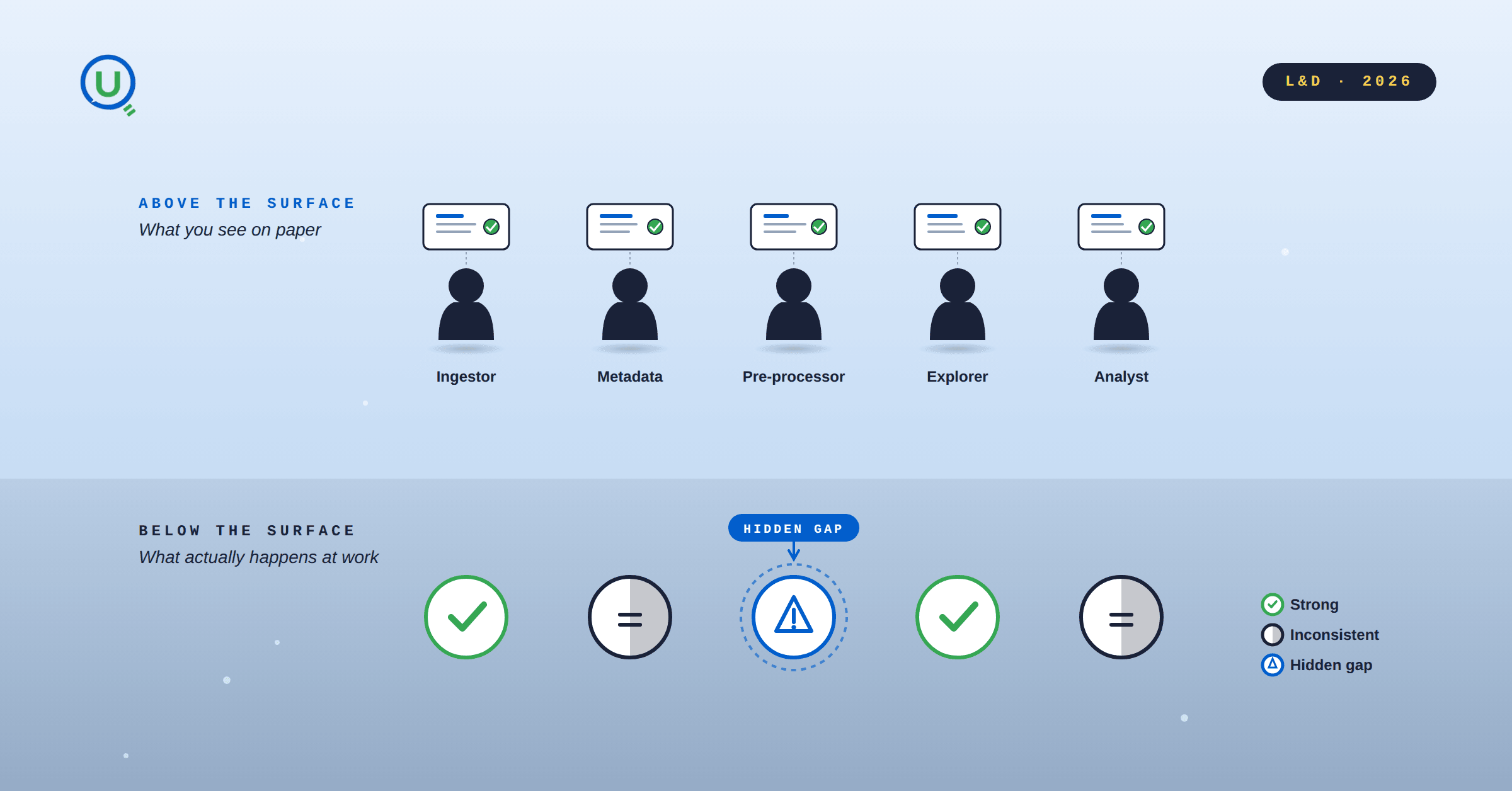
Skill gaps in data teams rarely show up in surveys or certifications. They show up when someone calls pd.read_csv on a .xlsx file. Three methods to make competence observable, not self-reported.
Spark optimization isn't always complex; some tweaks have a huge impact. Inferring schemas forces Spark to scan your data twice, slowing ingestion and inflating cost. Explicit schemas avoid the extra pass and make pipelines faster and cheaper.

A practical walkthrough of how I reduced heavy batch workloads using Change Data Feed (CDF) in Databricks. This blog shows how CDF helps process only updated records, cutting compute costs and boosting pipeline efficiency.

A complete guide to building a future-ready L&D team in 2025. Explore the roles, skills, structure, and AI-driven strategies that drive real business impact.

Learn how to bridge the digital skills gap with effective upskilling strategies. Discover how to foster a culture of continuous learning, personalize training with AI, and focus on future-ready skills.

Discover 5 key strategies to overcome upskilling and reskilling challenges in the age of AI. Learn how to build a future-ready workforce with personalized learning, cross-functional collaboration, and real-world application.

Explore the key differences between LXP and LMS platforms and learn which is best for your business in 2025. Discover how AI-driven learning systems can boost employee engagement and upskill your workforce for the future.

Discover 6 powerful ways to upskill employees and future-proof your workforce in the age of AI and data. Learn how leading organizations are adapting learning strategies to stay ahead.

Explore the difference between reskilling and upskilling and why it matters for career growth and organizational success. Learn how reskilling helps workers pivot to new roles and how upskilling enhances current skills to stay competitive in today's fast-changing job market.

Explore the 6 core adult learning principles and how they can transform your training programs. Learn how to apply these principles for better engagement, retention, and real-world application, ensuring meaningful learning experiences for adult learners.

Discover the 9 key components of an effective learning experience and how they drive better engagement, retention, and real-world application. Learn how organizations can implement these elements to create impactful learning journeys.

Boost your Business Intelligence skills in 2025 with 25 hands-on exercises that cover data analysis, visualization, SQL, and more. Perfect for professionals looking to sharpen their BI expertise and stay ahead in the competitive job market.

Learn about Learning Management Systems (LMS), their key benefits, and popular examples like Moodle, Google Classroom, and Enqurious. Discover how LMS platforms are revolutionizing education and training for businesses and schools.
Discover how AI is transforming workplace learning and development by personalizing training, delivering real-time feedback, and aligning learning with business goals to drive workforce excellence and growth.

Discover why a Capstone Project is essential in 2025. Explore how it bridges the gap between theory and practice, enhances problem-solving skills, provides industry experience, and prepares students for real-world challenges. Learn how capstone projects are shaping future careers.

In today’s rapidly evolving job market, the value of evidence-based skills has never been more critical. As industries shift and technology transforms how we work, the need for tangible proof of competencies has become paramount.

In today’s rapidly evolving technological landscape, one skill stands out above all others: learnability. Learnability, often described as the ability to continuously acquire new skills and adapt to change, is no longer just an advantage but a necessity.
To build a future-ready workforce, companies need to rethink talent strategies. Start by developing a data-driven talent system to align key roles with best-fit talent. Invest in AI training now to stay ahead, and shift hiring practices to focus on skills, not just job titles.

At Enqurious, we understand the importance of empowering workforces with the right skills to navigate emerging challenges. Enqurious works as a strategic partner to supplement and enhance L&D Teams.

Understanding how variables work together can supercharge your marketing strategy.

Marketing Effectiveness: Strategies, Channels, and ROI Maximization

The transformative journey of the energy sector: from outdated practices to a data-driven revolution.

Enhancing Readability for Effective Learning and Development
This guide helps to understand what elements come together to make or break a visual

Thoughtfully crafted instruction design with drops of ambiguity and room for creative thinking makes the learning experience more enjoyable and “real world”.

Even after putting the best of the content, infrastructure and people, the gap between the intention of organizations to foster a culture of learning and the actual implementation and adoption of learning initiatives by employees keeps on widening.

Understanding why it is so important to nurture self driven learners in a fast paced technology world

Leveraging data to design better and efficient L&D strategy for organization success