
Autonomous Data Engineering Guide
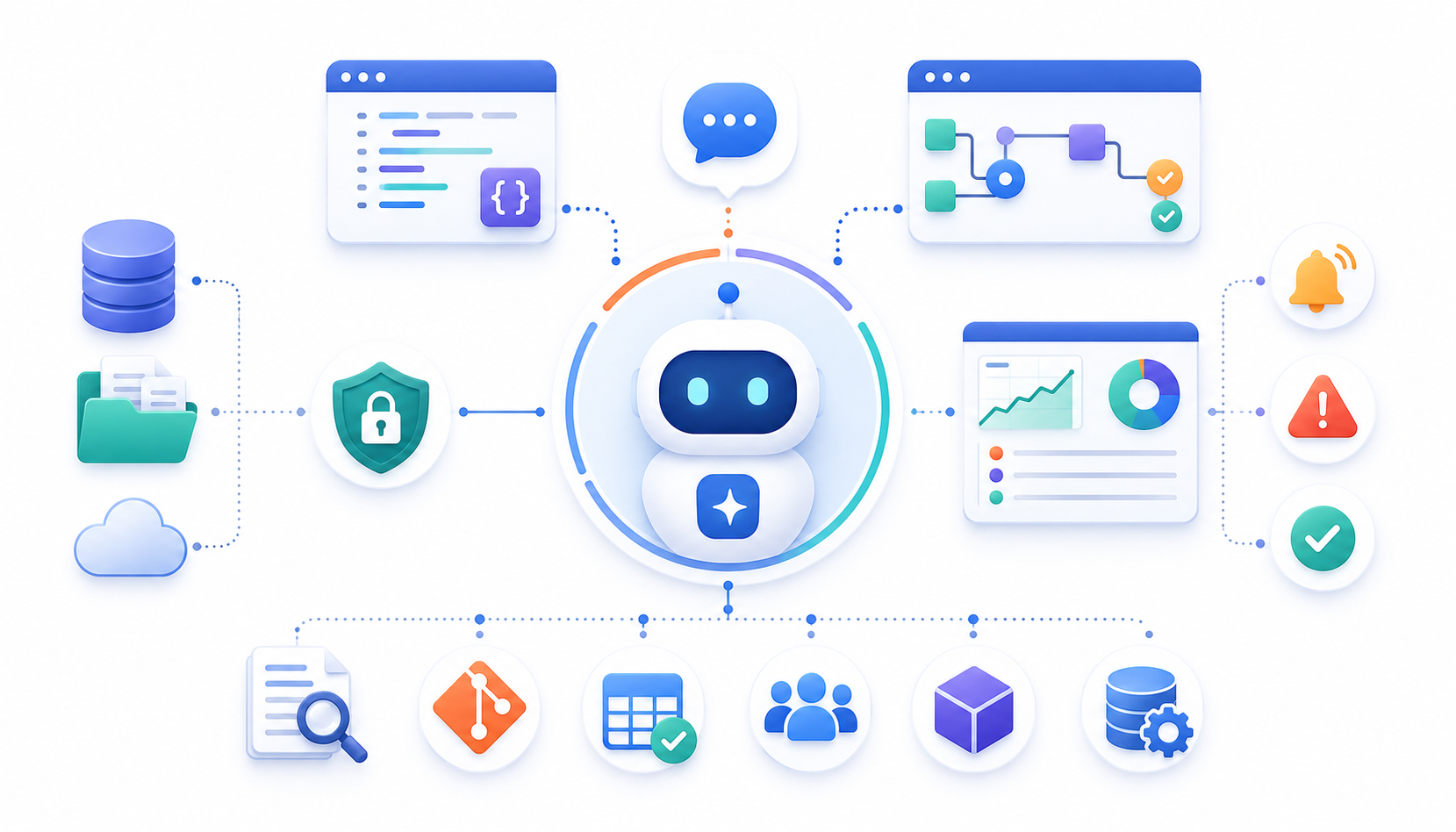
Ready to transform your data strategy with cutting-edge solutions?
Enqurious · 2026Data Engineering
TL;DR
Genie Code is Databricks' autonomous AI agent for data engineering, launched on March 11, 2026 to replace the reactive Databricks Assistant.
On real-world data science tasks, Databricks found Genie Code more than doubled the success rate of leading coding agents, from 32.1% to 77.1%, and every identified user gets 150 DBUs of free LLM usage per month before pay-as-you-go billing applies from July 6, 2026.
Topics covered: Genie Code vs. Databricks Assistant, Lakeflow pipeline monitoring, Unity Catalog governance, and Genie Code pricing.
Databricks Genie Code is an autonomous AI agent, not a coding assistant, that plans and executes multi-step data engineering tasks directly inside notebooks, the SQL editor, and the Lakeflow Pipelines Editor, replacing the older reactive Databricks Assistant that Databricks retired in March 2026.
The distinction between Genie Code and its predecessor is architectural, not cosmetic. Databricks Assistant responded to prompts with a code suggestion and stopped there. Genie Code reasons through a problem, writes and validates code, monitors pipelines in the background, and explains what it changed and why, while staying inside the permissions the user already has in Unity Catalog.
Why Genie Code replaced Databricks Assistant
What changed between Databricks Assistant and Genie Code?
The shift from Databricks Assistant to Genie Code moved the tool from reactive suggestions to autonomous execution. Databricks Assistant only responded to direct prompts with code suggestions and had no awareness of the workspace or production pipelines. Genie Code plans and executes multi-step tasks, has deep Unity Catalog integration, keeps persistent memory of a user's patterns across sessions, and proactively monitors Lakeflow pipelines and AI models in the background.
Databricks Assistant (old) | Genie Code (new) |
|---|---|
Reactive, responds to prompts | Autonomous, plans and executes multi-step tasks |
Code suggestions only | Builds pipelines, debugs, monitors, deploys |
No workspace context | Deep Unity Catalog integration |
Stateless between prompts | Persistent memory, learns user patterns |
No production awareness | Monitors Lakeflow pipelines in the background |
Is Genie Code just a smarter version of Databricks Assistant?
No. Genie Code is an autonomous agent that plans and executes multi-step work, monitors production pipelines, and retains context across sessions, while Databricks Assistant was limited to one-off, stateless code suggestions.
Genie Code cuts migration validation from weeks to hours
A Teradata-to-Databricks migration is a common scenario where the difference shows up directly: after migrating millions of records into a Unity Catalog table, validating that column names, data types, and cell-level values survived the move has traditionally meant building a manual comparison framework and debugging it line by line.
Inside Genie Code, a data engineer can open the agent directly in the notebook or pipeline editor, reference the error, and ask it to fix it. The agent explains why the error occurred, shows which cell and line it changed, and suggests how to prevent the same class of error going forward.
Tasks that used to take weeks, including finding data, building transformations, and stitching together jobs, can now be completed in hours while staying aligned with existing governance and operational standards, according to Databricks.
Where does Genie Code run in the data engineering workflow?
Genie Code is not a separate tool in a separate tab. It runs inside notebooks, the SQL editor, the Lakeflow Pipelines Editor, AI/BI dashboards, and MLflow, and chat threads persist as a user navigates between pages. The capabilities most relevant to data engineers are pipeline development, orchestration, proactive monitoring, and governance-aware execution.
Pipeline development: builds production-ready Spark Declarative Pipelines from natural language and automates ETL and query optimisation.
Orchestration: generates production-ready pipelines, orchestrates them with jobs, and debugs failures.
Proactive monitoring: triages Lakeflow pipeline and AI model failures in the background, analyses agent traces to fix hallucinations, and tunes resource allocation before a human intervenes.
Governance-aware execution: operates entirely within the user's existing Unity Catalog permissions, so it cannot access data or perform operations the user isn't already authorised for.
Does Genie Code have more data access than the user running it?
No. Genie Code is governed by Unity Catalog permissions, so it can only access data and perform operations the logged-in user already has permission for.
The June 2026 command center changed how DE teams use Genie Code
As of June 2026, Genie Code runs from a full-page command center where the active thread is shown prominently and notebooks or files surface as tabs alongside it. Data engineers can start work directly from Genie Code instead of from a notebook, run multiple threads in parallel, and personalise Genie Code with skills, instructions, and MCP servers.
For work that spans multiple notebooks, multiple pipelines, and multiple days, this removes the context loss that came from switching between assets under the previous interface.
What Genie Code costs after July 6, 2026
Every identified user gets 150 DBUs of free LLM usage every month, worth roughly $10.50 per user per month at US East rates, before any billing applies. Starting July 6, 2026, usage beyond that free allowance is billed under a single pay-as-you-go model shared across Genie Spaces, Genie Code, and Genie. The model is free first, then paid: a user is only billed once they cross their monthly 150 DBU allowance.
For most day-to-day work, such as debugging a pipeline error, generating a transformation, or fixing a failing job, a data engineer will comfortably stay within the free allowance. The exception to watch is automation: service principals have no free allowance, so every DBU of LLM usage from a service principal is billed from the first request. Compute costs for running pipelines and queries are billed separately, as they always have been under standard Databricks billing.
Parameter | Value |
|---|---|
Free monthly allowance | 150 DBUs per identified user (~$10.50 at US East rates) |
Billing start date | July 6, 2026 |
Service principal allowance | None, billed from the first request |
Shared pricing model | Genie Spaces, Genie Code, Genie |
Compute costs | Billed separately under standard Databricks billing |
Does Genie Code have a free tier?
Yes. Every identified user receives 150 DBUs of free LLM usage each month, worth about $10.50 at US East rates. Usage beyond that is billed on a pay-as-you-go basis starting July 6, 2026, except for service principals, which are billed from the first request with no free allowance.
How to start using Genie Code in a data engineering workflow
The fastest path into Genie Code starts inside an existing notebook or the Lakeflow Pipelines Editor, since the agent requires no separate installation.
Open it where you already work: Genie Code is available directly in any notebook or the Lakeflow Pipelines Editor.
Give it context: reference table names with @ mentions, paste the full error stack trace, and describe what the pipeline is supposed to do.
Target the highest-cost problems: a failing pipeline job, a new Spark Declarative Pipeline, source-to-target data quality validation, or orchestrating a new job into an existing workflow.
Review before approving: in agent mode, Genie Code can execute changes, including deleting data in tables or jobs if given unrestricted freedom, so production-asset changes should be reviewed before approval.
Connect it to version control: commit successful scripts to GitHub and use Databricks' built-in notebook versioning.
Genie Code marks data engineering's shift to fully agentic tooling
Genie Code represents the same shift for data engineering that GitHub Copilot's move to fully agentic coding tools represented for software engineering, and it is moving faster. For a data engineer, that translates into fewer late nights debugging pipelines written without enough context, faster onboarding for new team members unfamiliar with the codebase, and a migration validation framework that goes from a three-day task to an afternoon draft.
The teams that get the most out of Genie Code are not the ones adopting it broadly on day one. They are the ones starting with the highest-cost, most repetitive debugging and validation work, where the 32.1%-to-77.1% jump in agent success rate translates directly into engineering hours saved.
Quick reference glossary
Genie Code — Databricks' autonomous AI agent for data engineering, data science, and analytics that plans and executes multi-step tasks, monitors production pipelines, and operates within the user's existing Unity Catalog permissions.
Databricks Assistant — The reactive, stateless coding assistant that Genie Code replaced in March 2026; it offered code suggestions only, with no workspace or production context.
Lakeflow Pipelines — Databricks' framework for building and orchestrating production data pipelines, which Genie Code can generate, debug, and proactively monitor.
Unity Catalog — Databricks' unified governance layer for access control and permissions; Genie Code inherits and is bound by the calling user's Unity Catalog permissions.
DBU (Databricks Unit) — Databricks' unit of compute/consumption used to price Genie Code's LLM usage; users get 150 free DBUs per month before pay-as-you-go billing applies.
At Enqurious (https://www.enqurious.com/blog) , we work with data teams on Databricks to close the gap between what the platform can do and what teams actually know how to use. If your team is navigating the shift to agentic data engineering, we'd love to help.
Ready to Experience the Future of Data?
You Might Also Like
Discover why Claude says "Usage Limit Reached" and how to actually fix it. Learn the difference between rolling session limits, fixed weekly caps, and how >150k context sizes silently drain your allowance.
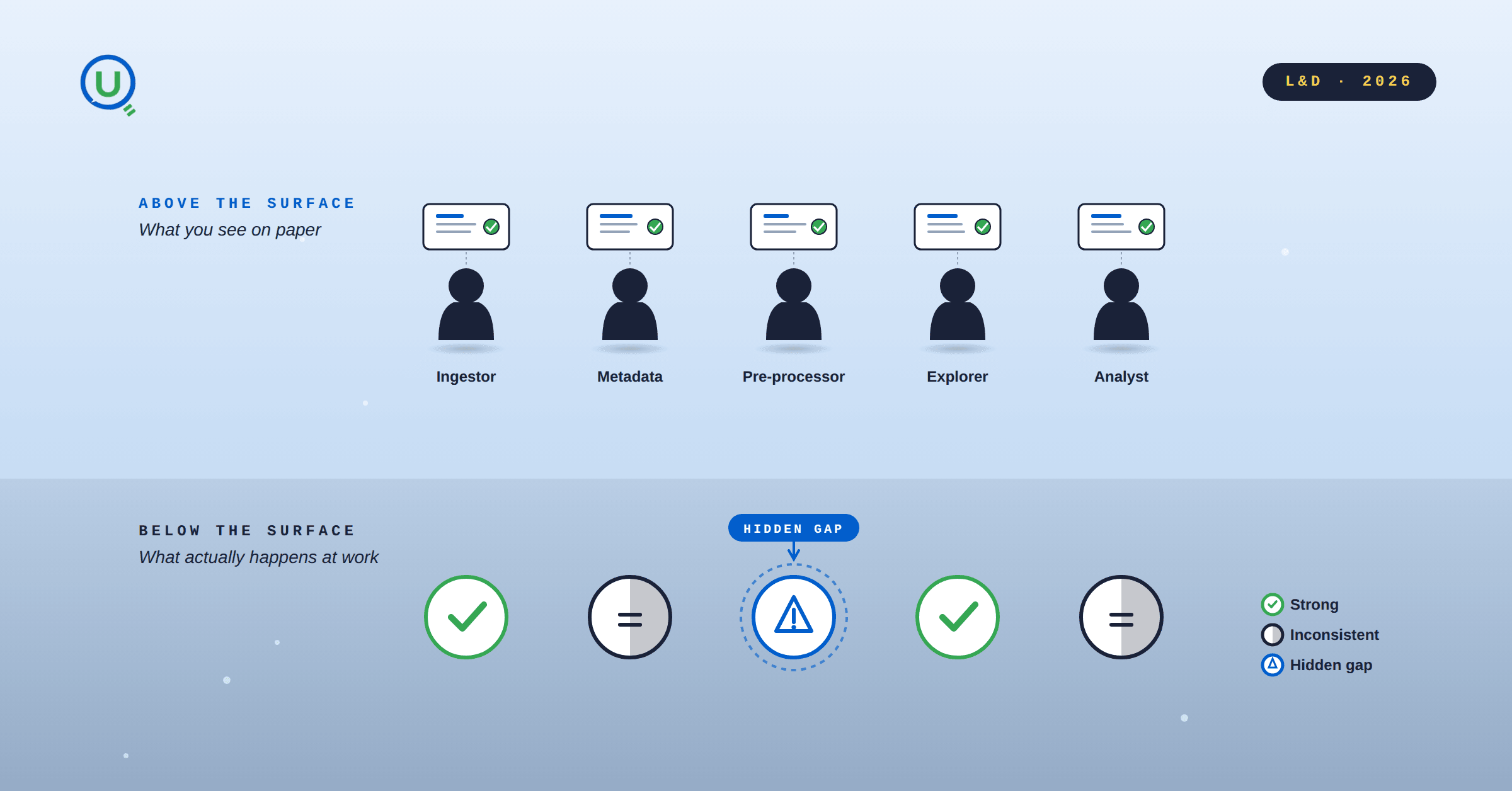
Skill gaps in data teams rarely show up in surveys or certifications. They show up when someone calls pd.read_csv on a .xlsx file. Three methods to make competence observable, not self-reported.
Spark optimization isn't always complex; some tweaks have a huge impact. Inferring schemas forces Spark to scan your data twice, slowing ingestion and inflating cost. Explicit schemas avoid the extra pass and make pipelines faster and cheaper.

A practical walkthrough of how I reduced heavy batch workloads using Change Data Feed (CDF) in Databricks. This blog shows how CDF helps process only updated records, cutting compute costs and boosting pipeline efficiency.

Why DELETE isn’t enough under GDPR, and how Time Travel can make sensitive data reappear unless VACUUM is used correctly.

A complete guide to building a future-ready L&D team in 2025. Explore the roles, skills, structure, and AI-driven strategies that drive real business impact.

Learn how to bridge the digital skills gap with effective upskilling strategies. Discover how to foster a culture of continuous learning, personalize training with AI, and focus on future-ready skills.

Discover 5 key strategies to overcome upskilling and reskilling challenges in the age of AI. Learn how to build a future-ready workforce with personalized learning, cross-functional collaboration, and real-world application.
Explore the key differences between LXP and LMS platforms and learn which is best for your business in 2025. Discover how AI-driven learning systems can boost employee engagement and upskill your workforce for the future.

Discover 6 powerful ways to upskill employees and future-proof your workforce in the age of AI and data. Learn how leading organizations are adapting learning strategies to stay ahead.

Explore the difference between reskilling and upskilling and why it matters for career growth and organizational success. Learn how reskilling helps workers pivot to new roles and how upskilling enhances current skills to stay competitive in today's fast-changing job market.

Explore the 6 core adult learning principles and how they can transform your training programs. Learn how to apply these principles for better engagement, retention, and real-world application, ensuring meaningful learning experiences for adult learners.

Discover the 9 key components of an effective learning experience and how they drive better engagement, retention, and real-world application. Learn how organizations can implement these elements to create impactful learning journeys.

Boost your Business Intelligence skills in 2025 with 25 hands-on exercises that cover data analysis, visualization, SQL, and more. Perfect for professionals looking to sharpen their BI expertise and stay ahead in the competitive job market.

Learn about Learning Management Systems (LMS), their key benefits, and popular examples like Moodle, Google Classroom, and Enqurious. Discover how LMS platforms are revolutionizing education and training for businesses and schools.

Discover how AI is transforming workplace learning and development by personalizing training, delivering real-time feedback, and aligning learning with business goals to drive workforce excellence and growth.

Discover why a Capstone Project is essential in 2025. Explore how it bridges the gap between theory and practice, enhances problem-solving skills, provides industry experience, and prepares students for real-world challenges. Learn how capstone projects are shaping future careers.

In today’s rapidly evolving job market, the value of evidence-based skills has never been more critical. As industries shift and technology transforms how we work, the need for tangible proof of competencies has become paramount.

In today’s rapidly evolving technological landscape, one skill stands out above all others: learnability. Learnability, often described as the ability to continuously acquire new skills and adapt to change, is no longer just an advantage but a necessity.

To build a future-ready workforce, companies need to rethink talent strategies. Start by developing a data-driven talent system to align key roles with best-fit talent. Invest in AI training now to stay ahead, and shift hiring practices to focus on skills, not just job titles.

At Enqurious, we understand the importance of empowering workforces with the right skills to navigate emerging challenges. Enqurious works as a strategic partner to supplement and enhance L&D Teams.

Understanding how variables work together can supercharge your marketing strategy.

Marketing Effectiveness: Strategies, Channels, and ROI Maximization

The transformative journey of the energy sector: from outdated practices to a data-driven revolution.

Enhancing Readability for Effective Learning and Development
This guide helps to understand what elements come together to make or break a visual

Thoughtfully crafted instruction design with drops of ambiguity and room for creative thinking makes the learning experience more enjoyable and “real world”.

Even after putting the best of the content, infrastructure and people, the gap between the intention of organizations to foster a culture of learning and the actual implementation and adoption of learning initiatives by employees keeps on widening.

Understanding why it is so important to nurture self driven learners in a fast paced technology world

Leveraging data to design better and efficient L&D strategy for organization success