
How a Simple ETL Job Turned Into a 5-Hour Kubernetes DNS Nightmare
Ready to transform your data strategy with cutting-edge solutions?
- A simple ETL job broke into a 5-hour Kubernetes DNS nightmare. This blog walks through the symptoms, the chase, and the surprisingly simple fix.
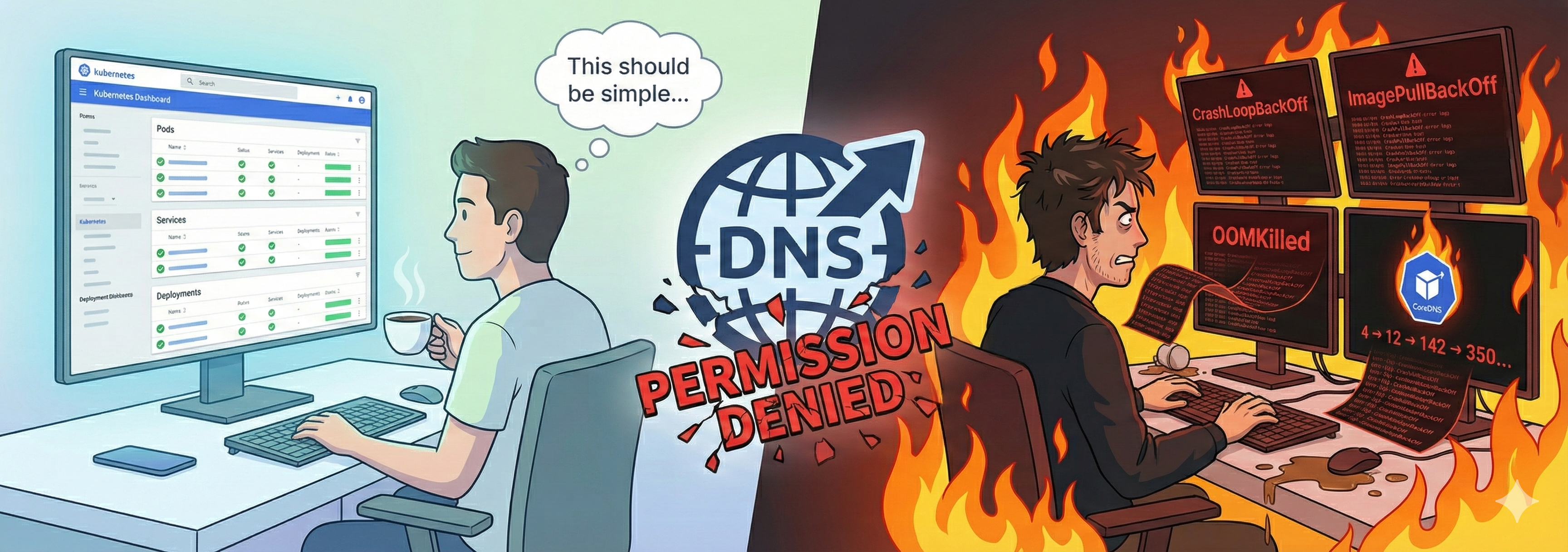
“It was just supposed to be a simple ETL microservice. Fetch some data, transform it, and load it into Postgres. 30 minutes, tops.”
- Famous last words before a 5-hour DNS debugging marathon
The Setup That Should Have Been Simple
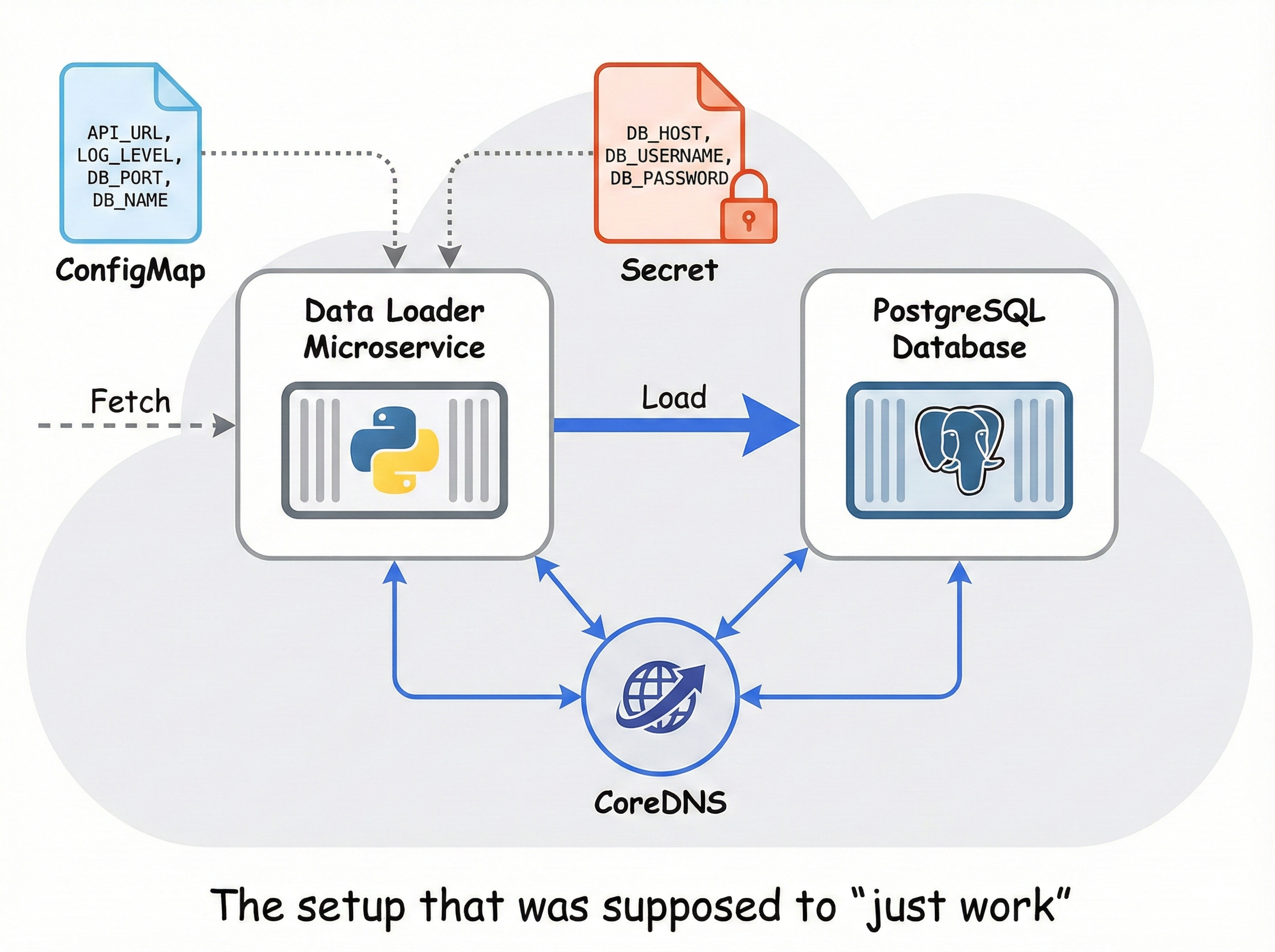
It’s a regular Tuesday afternoon, and I’m building what I thought would be a straightforward microservices setup in Kubernetes. Simple enough, right? A data loader microservice that fetches user data from an API, transforms it, and loads it into a PostgreSQL database. ConfigMaps for non-sensitive configs, Secrets for credentials, and textbook Kubernetes stuff.
Everything Was Going Fine… Until It Wasn’t
The architecture looked clean on paper:
- Data Loader Microservice: Python app containerized and ready to roll
- PostgreSQL Database: Running in its own pod with persistent storage
- ConfigMaps: Handling API URLs, log levels, DB port, DB name
- Secrets: Safeguarding DB credentials (properly base64 encoded, thank you very much)
I built my Docker image, configured my deployments, and applied my ConfigMaps and Secrets. The PostgreSQL pod started up beautifully. Green lights everywhere.
Then I deployed the ETL microservice and… 💥

Me: “That’s odd. Let me check the logs…”
ERROR:root:Error: could not translate host name 'postgres-service' to address:
Temporary failure in name resolution
The DNS Mystery Deepens
Wait, what? The service is right there! I can see it in kubectl get svc. The name is correct. The port is correct. What’s happening?
I tried the classic debugging move, checking if it’s an external network issue:
kubectl logs etl-deployment-7cd7bd469b-7dqfl
...
Failed to resolve 'random-data-api.com': Temporary failure in name resolution
Oh no. It’s not just the internal service. DNS is completely broken.
Time to investigate CoreDNS:
kubectl get pods -n kube-system -l k8s-app=kube-dns
NAME                       READY   STATUS             RESTARTS
coredns-668d6bf9bc-8xg47   0/1     CrashLoopBackOff   142
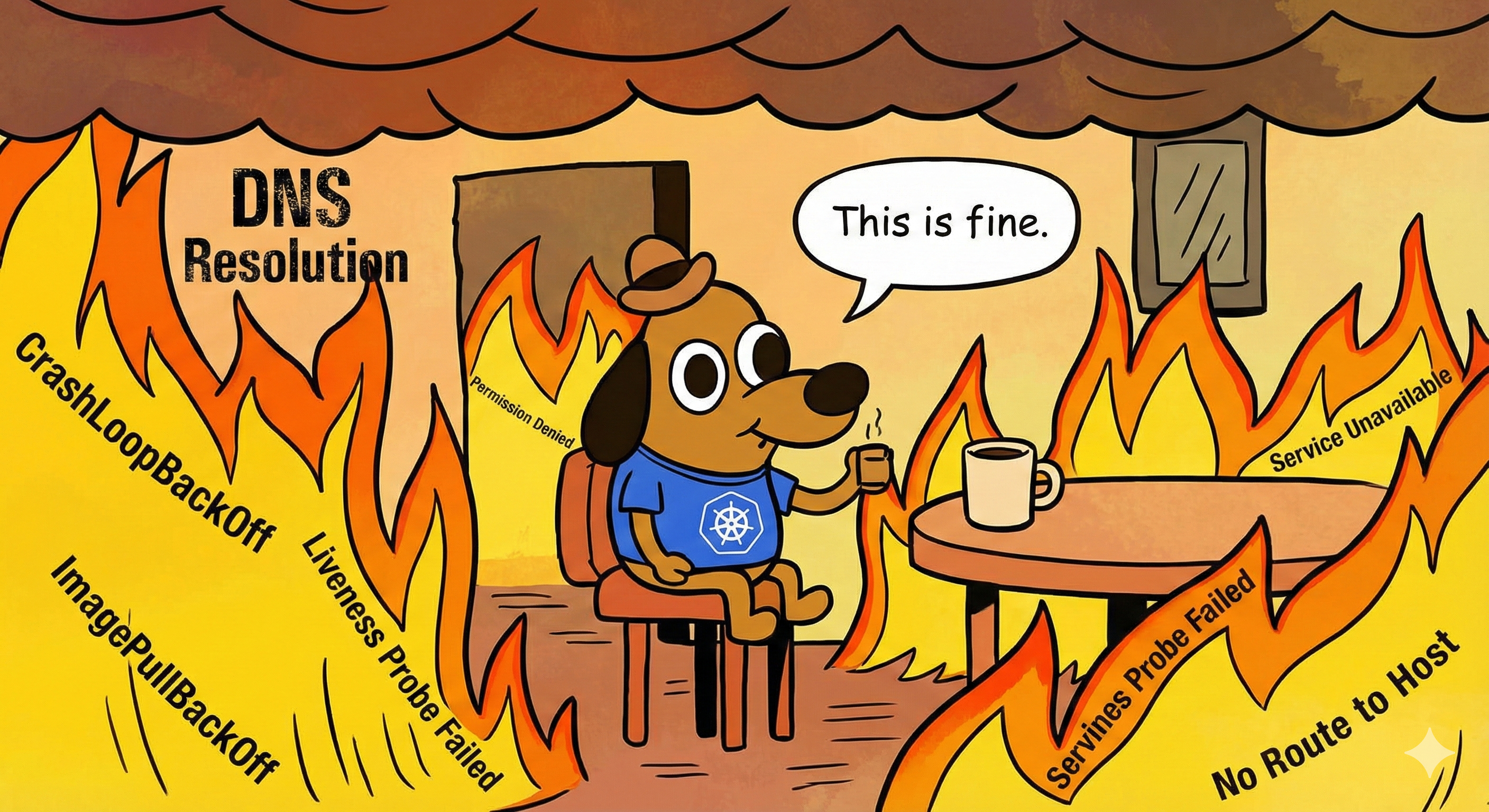
There it was. My DNS server was having an existential crisis, trapped in an infinite CrashLoopBackOff.
Down the Troubleshooting Rabbit Hole
Attempt #1: “Just Check the Logs”
kubectl logs -n kube-system coredns-668d6bf9bc-8xg47
Listen: listen tcp :53: bind: permission denied
Ah! A permission error. CoreDNS can’t bind to port 53. Easy fix; just add the ` NET_BIND_SERVICE` capability!
I edited the CoreDNS deployment:
securityContext:
  capabilities:
    add:
      - NET_BIND_SERVICE
Surely this would work… right?
Narrator: It did not work.
Attempt #2: “Maybe it needs allowPrivilegeEscalation?”
Added allowPrivilegeEscalation: true to the security context. Restarted CoreDNS.
kubectl get pods -n kube-system -l k8s-app=kube-dns
NAME                       READY   STATUS             RESTARTS
coredns-668d6bf9bc-tsn9r   0/1     CrashLoopBackOff   12
Still crashing. Still the same error.
Me, increasingly frustrated: “But ` NET_BIND_SERVICE` is literally right there in the deployment file!”

Attempt #3: “Let’s Try a Different Port!”
Okay, if port 53 is causing problems because it’s a privileged port (ports < 1024), let’s just use a non-privileged port instead!
I edited the CoreDNS ConfigMap and changed the port to 1053:
data:
  Corefile: |
    .:1053 {
      log
      errors
      health {
        lameduck 5s
      }
      ready
      kubernetes cluster.local in-addr.arpa ip6.arpa {
        pods insecure
        fallthrough in-addr.arpa ip6.arpa
        ttl 30
      }
      prometheus :9153
      forward . /etc/resolv.conf {
        max_concurrent 1000
      }
    }
Restarted CoreDNS:
kubectl -n kube-system delete pod -l k8s-app=kube-dns
AND IT WORKED! CoreDNS was finally running!
kubectl get pods -n kube-system -l k8s-app=kube-dns
NAME                       READY   STATUS    RESTARTS
coredns-698f4cc5c9-xflhm   1/1     Running   0
Me: “YES! We did it! DNS is working now!”
But then I tested my ETL pod…
kubectl logs etl-deployment-7cd7bd469b-7dqfl
ERROR:root:Error: could not translate host name 'postgres-service' to address:
Temporary failure in name resolution
Me: “WHAT? How is it STILL broken?”

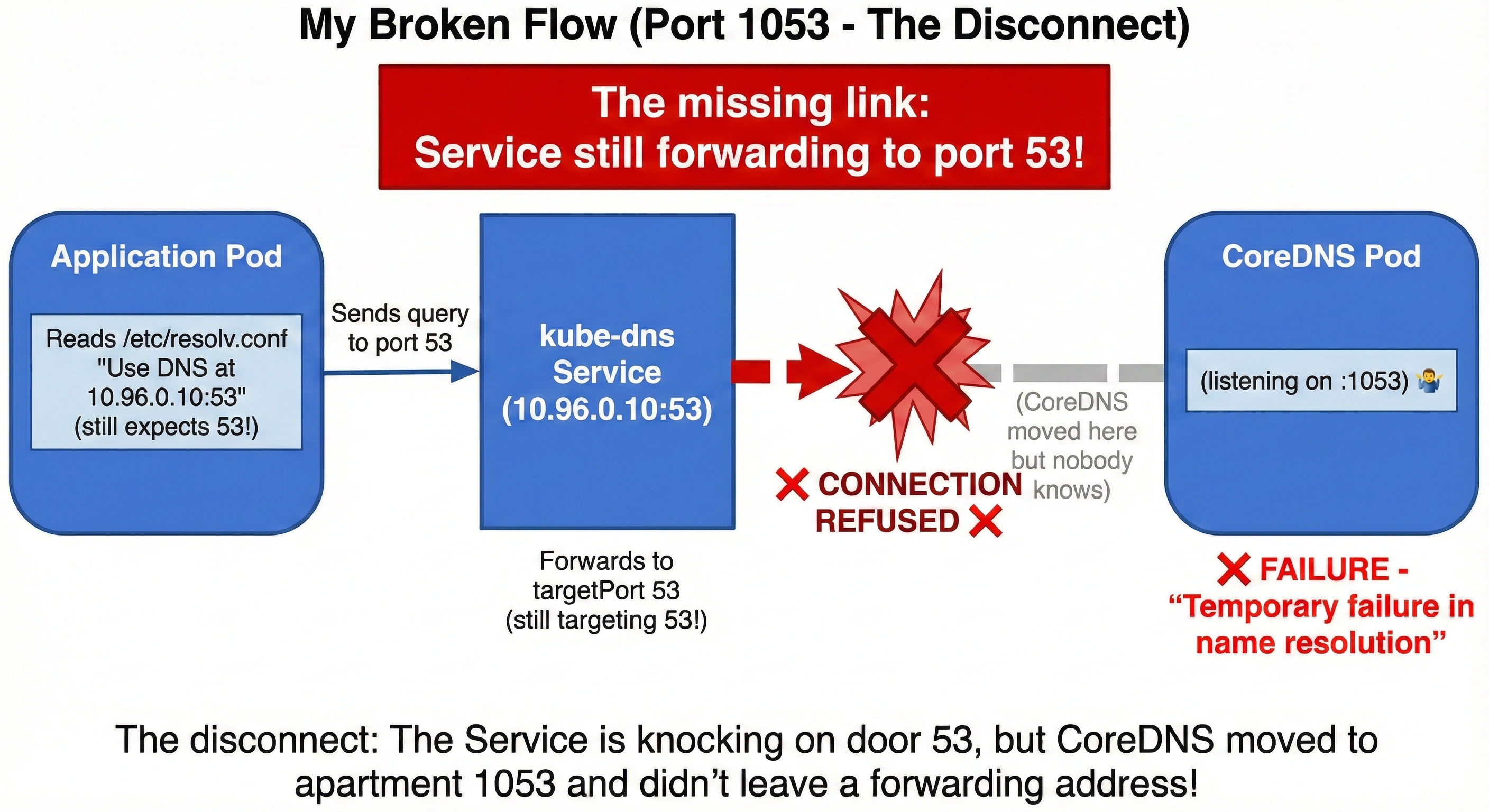
The problem? CoreDNS was now listening on port 1053, but all the pods were still configured to use port 53 for DNS lookups. I’d essentially moved the DNS server to a different address without telling anyone where it went.
The Nuclear Option: Full Minikube Reset
At this point, I was ready to throw my laptop out the window. Instead, I did the next best thing, nuked everything, and started fresh:
minikube delete
rm -rf ./minikube  # Clean slate, baby!
minikube start
Fresh install, clean DNS configuration, port 53 as intended. Everything should work now.
But still, the Same error. Same CrashLoopBackOff. Same “permission denied” message.
Me, on the verge of tears: “WHY?! It’s a fresh install! What is happening?!”
The Eureka Moment (Finally!)
After hours of debugging, countless chats with ChatGPT, Claude Code, and Gemini, and more coffee than is probably healthy, I finally understood the root cause:
Linux containers run as non-root users by default for security.
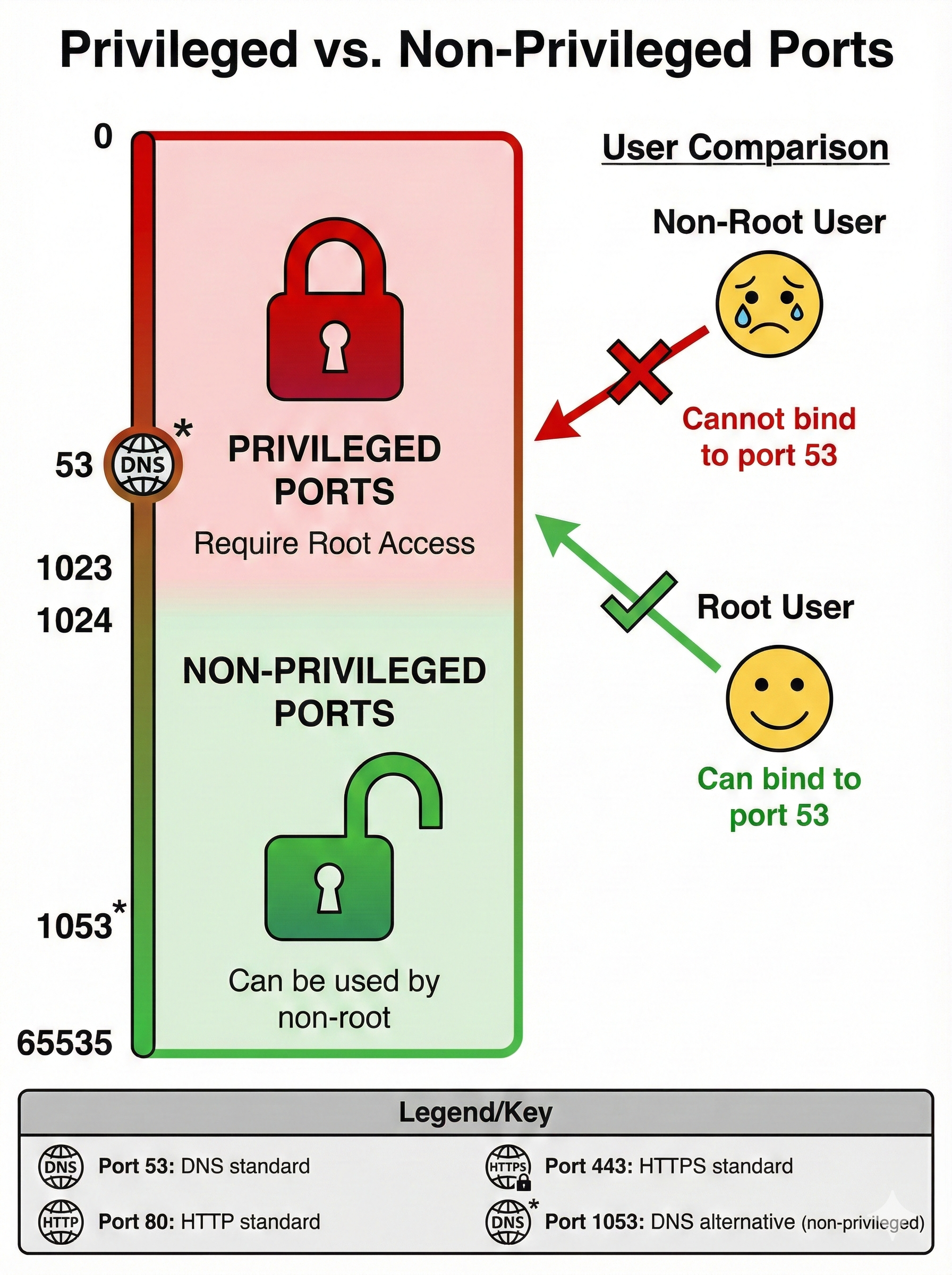
Port 53 is a privileged port that requires root access to bind to. Even with the NET_BIND_SERVICE` `` capability, even with allowPrivilegeEscalation: true` ``, CoreDNS running as a non-root user simply couldn’t bind to port 53.
The solution? Allow CoreDNS to run as root (in a controlled way):
kubectl patch deployment coredns -n kube-system \
  --type='json' \
  -p='[{"op": "add", "path": "/spec/template/spec/containers/0/securityContext/runAsUser", "value": 0}]'
This sets ` runAsUser: 0`, telling the container to run as root (UID 0).
I also enabled host networking to give CoreDNS direct access to the host’s network namespace:
kubectl patch deployment coredns -n kube-system \
  --type='json' \
  -p='[{"op": "add", "path": "/spec/template/spec/hostNetwork", "value": true}]'
Restarted CoreDNS one more time:
kubectl -n kube-system delete pod -l k8s-app=kube-dns
And then… silence. No crash. No errors.
kubectl get pods -n kube-system -l k8s-app=kube-dns
NAME                       READY   STATUS    RESTARTS
coredns-698f4cc5c9-xflhm   1/1     Running   0
I nervously checked the logs:
kubectl logs -n kube-system -l k8s-app=kube-dns
.:53
[INFO] plugin/reload: Running configuration SHA512 = b141a95c4ad45582b9d8d1be55241970...
CoreDNS-1.11.3
linux/amd64, go1.21.11, a6338e9
[INFO] 127.0.0.1:54374 - 17618 "HINFO IN 1085771236002924139.3914264802840083309...
It was actually working! Time to test DNS resolution:
kubectl run -it --rm dns-test --image=busybox:1.28 --restart=Never -- nslookup kubernetes.default
Server:    10.96.0.10
Address 1: 10.96.0.10 kube-dns.kube-system.svc.cluster.local

Name:      kubernetes.default
Address 1: 10.96.0.1 kubernetes.default.svc.cluster.local
✅ Internal DNS working!
kubectl run -it --rm dns-test --image=busybox:1.28 --restart=Never -- nslookup postgres-service
Server:    10.96.0.10
Address 1: 10.96.0.10 kube-dns.kube-system.svc.cluster.local

Name:      postgres-service
Address 1: 10.98.33.166 postgres-service.default.svc.cluster.local
✅ Service discovery working!
kubectl run -it --rm dns-test --image=busybox:1.28 --restart=Never -- nslookup random-data-api.com
Server:    10.96.0.10
Address 1: 10.96.0.10 kube-dns.kube-system.svc.cluster.local

Name:      random-data-api.com
Address 1: 67.205.161.199
✅ External DNS working!
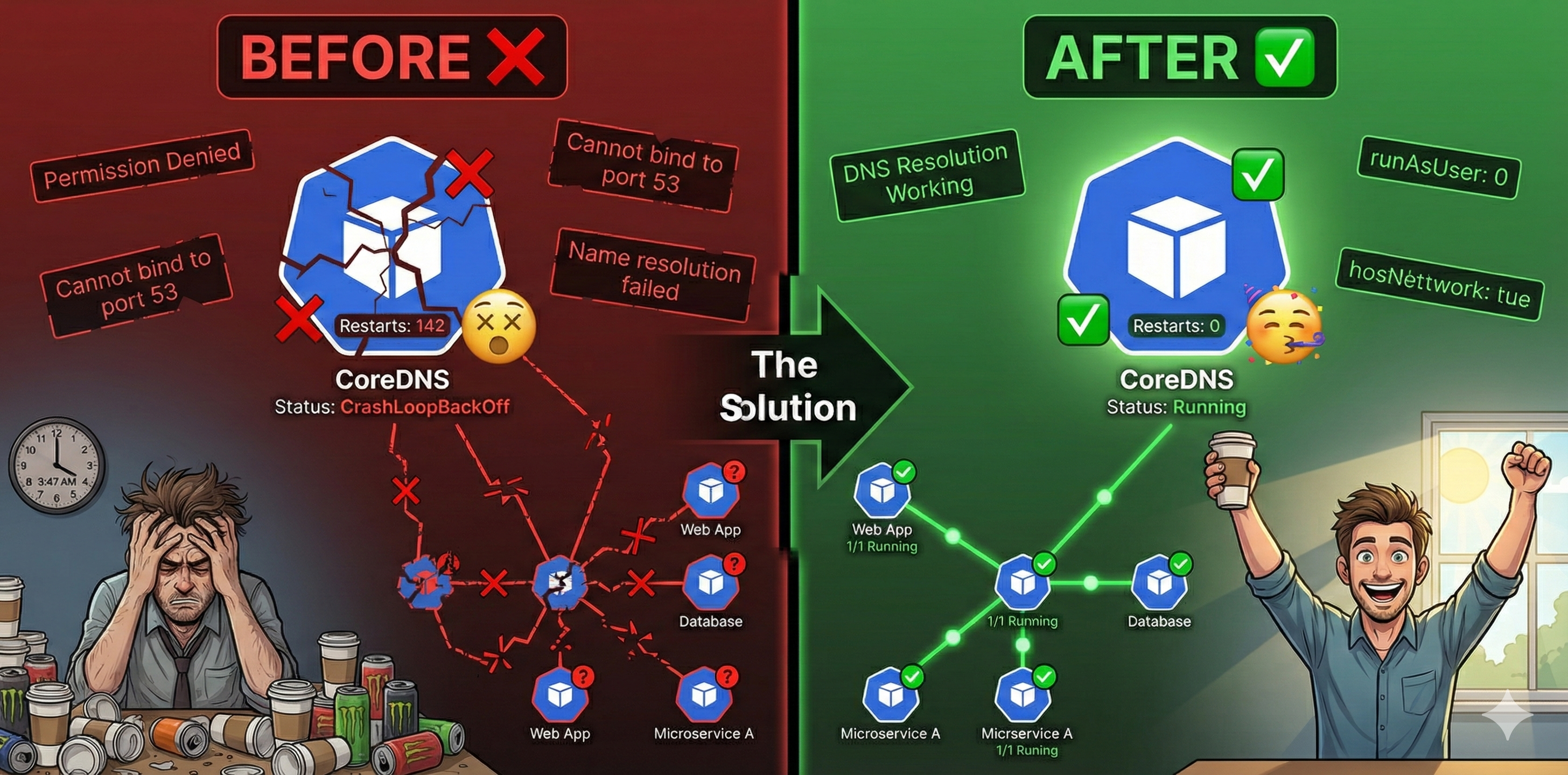
Victory at Last
I redeployed my ETL microservice and watched the logs with bated breath:
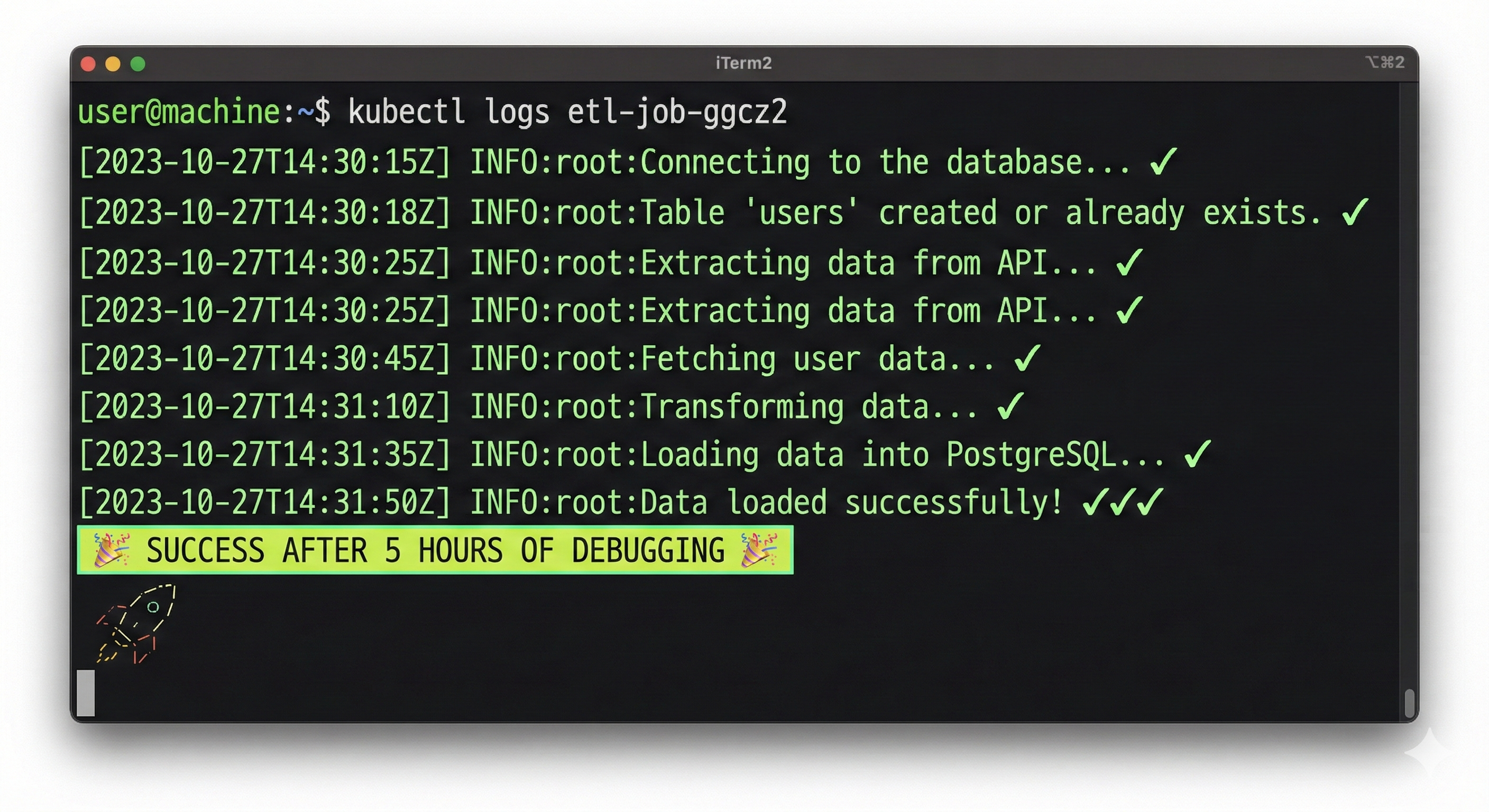
THE ETL JOB COMPLETED SUCCESSFULLY!
Wait, But Why Didn’t Port 1053 Work?
You might be wondering: “Port 1053 is non-privileged. CoreDNS was running. Why didn’t it work?”
The answer: It’s like changing your phone number without updating your contacts.
The DNS Resolution Chain
When a Kubernetes pod resolves a hostname:
- Pod reads
` /etc/resolv.conf`→ points to10.96.0.10:53 - Query sent to kube-dns Service on port 53
- Service forwards to CoreDNS on port 53 (defined in targetPort)
- CoreDNS responds
The problem? When I changed CoreDNS to port 1053, only step 4 changed. Steps 1-3 still expected port 53!
What Actually Needed to Change
| Component | What I Changed | What I Missed |
|---|---|---|
| CoreDNS | ✅ Listening on 1053 | - |
| kube-dns Service | - | ❌ Still forwarding to port 53 |
| kubelet (all nodes) | - | ❌ Still configured for port 53 |
| Pod resolv.conf | - | ❌ Still pointing to port 53 |
Result: CoreDNS was listening on the wrong port. It’s like moving apartments without telling the post office.
The Real Insight
Port 1053 solved the permission problem (CoreDNS could bind without root), but created a communication problem (nothing could reach it there).
Port 53 has been the DNS standard since 1987. Changing it means updating every component in the cluster, nodes, services, pods, everything.
The simpler fix? Let CoreDNS run as root (` runAsUser: 0`) and keep port 53. One change instead of cluster-wide reconfiguration.
The Takeaway
Three lessons from 5 hours of debugging:
- Privileged ports need root access - This is Linux security, not a bug
- System defaults exist for a reason - Port 53 is everywhere; changing it cascades
- Simple root cause fix beats complex workarounds - Sometimes “just run as root” is the right answer
Quick Debug Commands
If you hit CoreDNS issues:
# Check CoreDNS status
kubectl get pods -n kube-system -l k8s-app=kube-dns

# Check logs for errors
kubectl logs -n kube-system -l k8s-app=kube-dns

# Test DNS resolution
kubectl run -it --rm dns-test --image=busybox:1.28 --restart=Never -- nslookup kubernetes.default

Remember: Fix DNS first, everything else second.
You Might Also Like
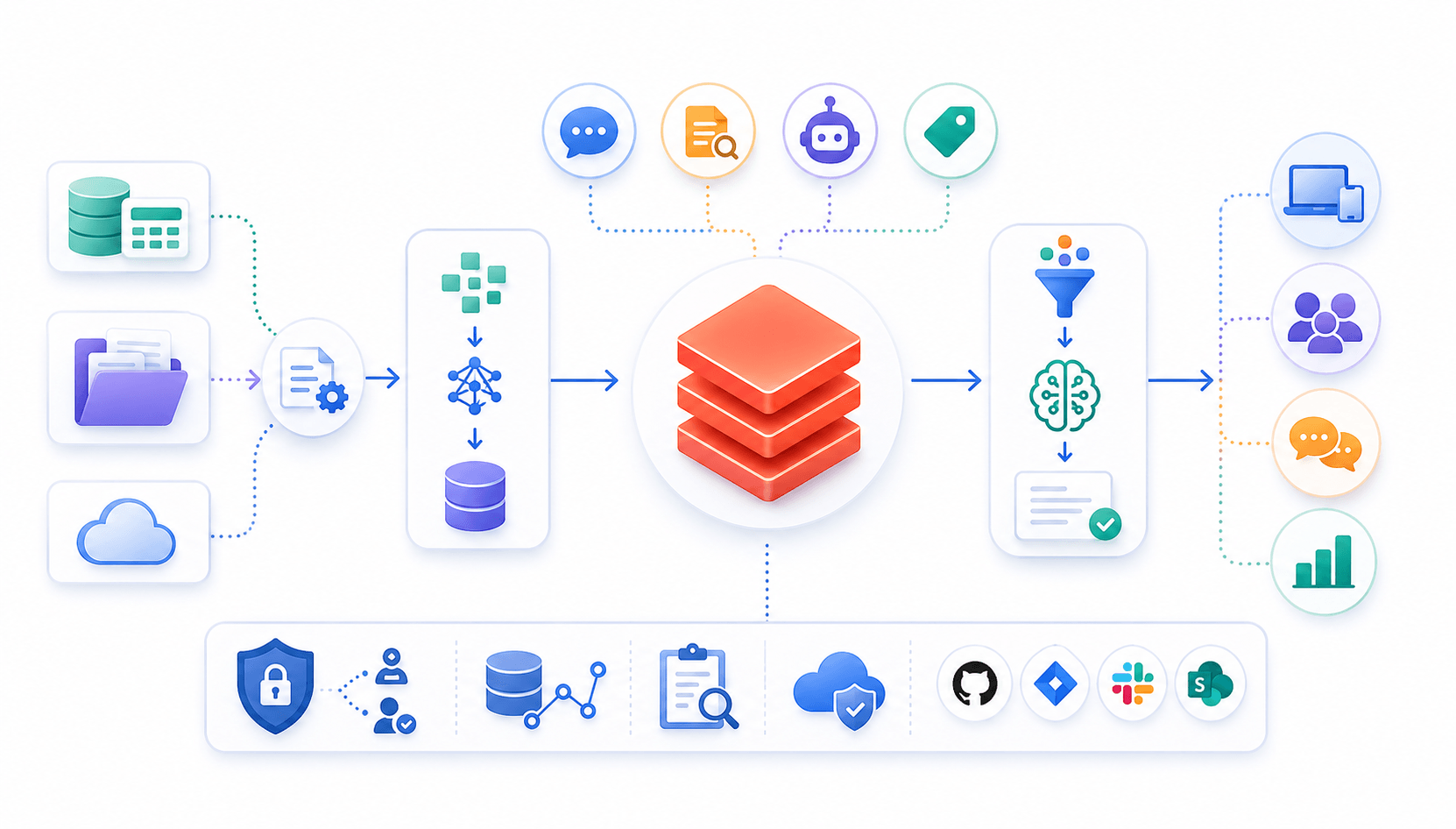
Learn to build governed RAG pipelines on Databricks using Agent Bricks and Unity Catalog. Discover the Knowledge Assistant, its 70% quality boost, and key limits.

Storage account keys and mount points give every user in a Databricks workspace the same shared access to ADLS, with no audit trail. Here's why teams are moving to Storage Credentials and External Locations instead.
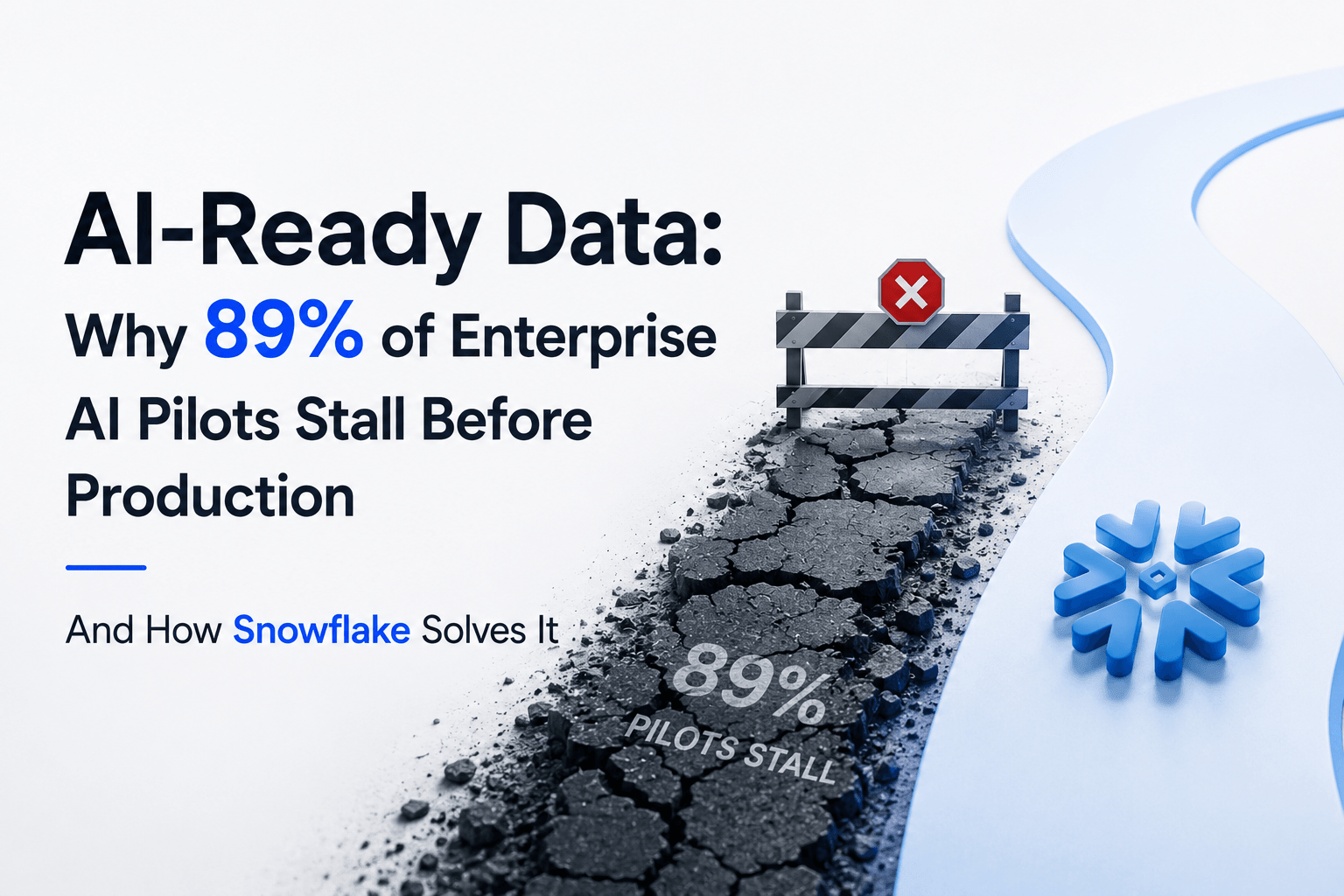
89% of enterprise AI pilots never reach production. Data integration, governance gaps, and silos are why. See how Snowflake Cortex AI fixes the root cause.
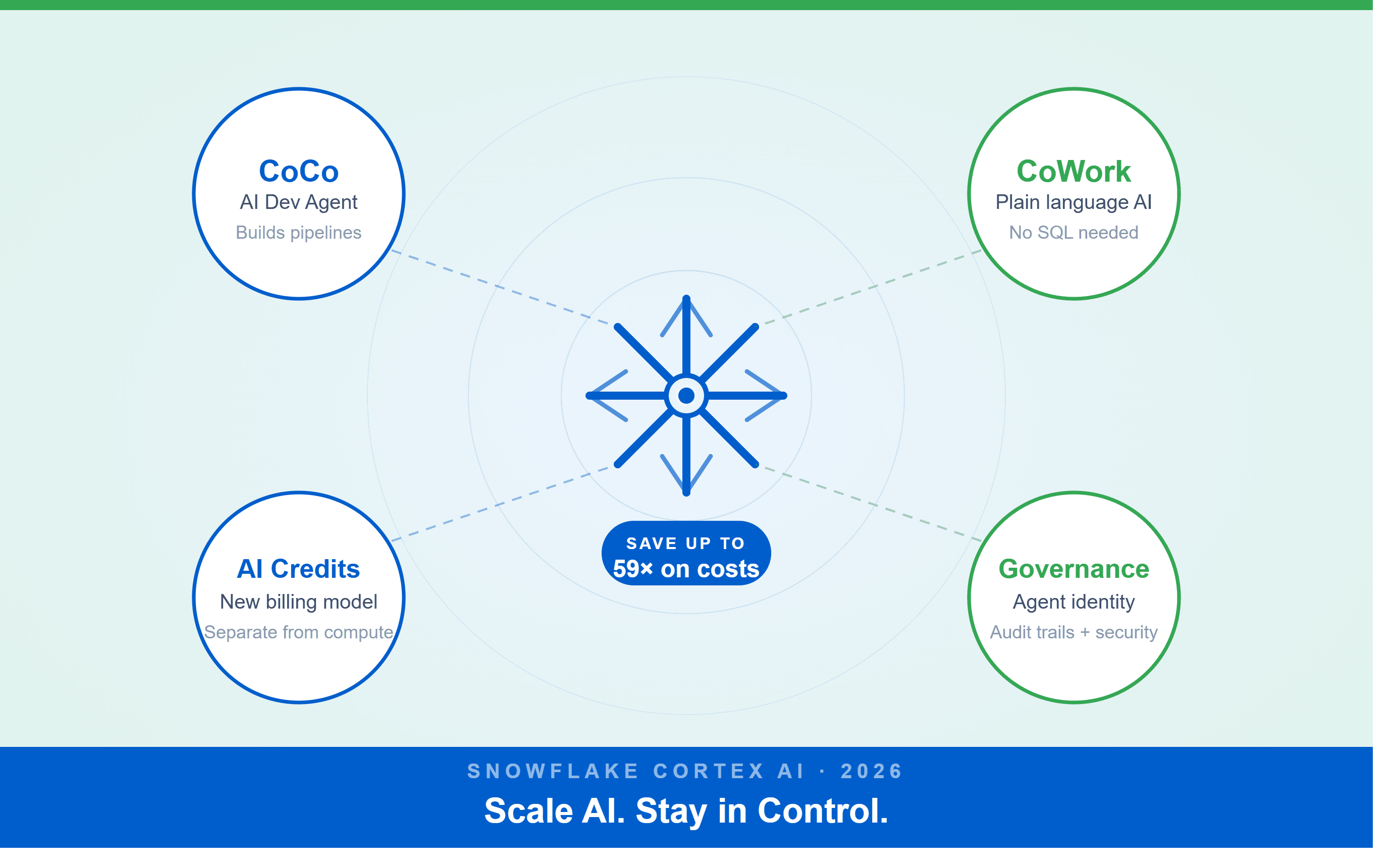
A Snowflake Summit 2026 benchmark revealed a 59x cost gap — open-source models at 440 credits vs. frontier models at 26,000 credits for identical workloads. Learn how CoCo, CoWork, AI Credits, and Cortex Training change enterprise AI strategy.
How a data engineering team replaced manual pipeline work with natural language prompts, using Claude Code and the Databricks AI Dev Kit.
Six errors, 6 hours of debugging, and the permission checklist that finally made Databricks Apps + Genie work. The full lessons-learned guide.
Your Claude Code session isn't lost. It's on disk, in a folder /resume isn't scanning. Here's how to find any session in 30 seconds, with the exact commands.
Scenario based learning replaces tutorials with realistic operational scenarios where engineers develop the hands on judgment classroom instruction cannot produce. How it works and why it matters.
The 2026 data engineering roadmap. SQL, Python, cloud, Airflow, dbt, streaming. What companies actually hire for and how to build a portfolio that gets shortlisted.

Medallion Architecture splits your data pipeline into Bronze, Silver, and Gold layers so a small business change never forces a full rebuild. Here's why it works.

I was working on a large content repository on Windows, and I needed to version some new work — campaign assets, workshop content, LinkedIn job descriptions, and some file deletions. Simple enough, right? What followed was a two-day journey through some of Git's more obscure corners.
New engineers shouldn't learn Docker like they're defusing a bomb. Here's how we created a fear-free learning environment—and cut training time in half." (165 characters)

A complete beginner’s guide to data quality, covering key challenges, real-world examples, and best practices for building trustworthy data.
Explore the power of Databricks Lakehouse, Delta tables, and modern data engineering practices to build reliable, scalable, and high-quality data pipelines."
A real-world Terraform war story where a “simple” Azure SQL deployment spirals into seven hard-earned lessons, covering deprecated providers, breaking changes, hidden Azure policies, and why cloud tutorials age fast. A practical, honest read for anyone learning Infrastructure as Code the hard way.

Data doesn’t wait - and neither should your insights. This blog breaks down streaming vs batch processing and shows, step by step, how to process real-time data using Azure Databricks.

This blog talks about Databricks’ Unity Catalog upgrades -like Governed Tags, Automated Data Classification, and ABAC which make data governance smarter, faster, and more automated.

Tired of boring images? Meet the 'Jai & Veeru' of AI! See how combining Claude and Nano Banana Pro creates mind-blowing results for comics, diagrams, and more.
What I thought would be a simple RBAC implementation turned into a comprehensive lesson in Kubernetes deployment. Part 1: Fixing three critical deployment errors. Part 2: Implementing namespace-scoped RBAC security. Real terminal outputs and lessons learned included
This blog walks you through how Databricks Connect completely transforms PySpark development workflow by letting us run Databricks-backed Spark code directly from your local IDE. From setup to debugging to best practices this Blog covers it all.
Master the bronze layer foundation of medallion architecture with COPY INTO - the command that handles incremental ingestion and schema evolution automatically. No more duplicate data, no more broken pipelines when new columns arrive. Your complete guide to production-ready raw data ingestion

This blog talks about the Power Law statistical distribution and how it explains content virality

This blog explains how Apache Airflow orchestrates tasks like a conductor leading an orchestra, ensuring smooth and efficient workflow management. Using a fun Romeo and Juliet analogy, it shows how Airflow handles timing, dependencies, and errors.
The blog contains the journey of ChatGPT, and what are the limitations of ChatGPT, due to which Langchain came into the picture to overcome the limitations and help us to create applications that can solve our real-time queries

An account of experience gained by Enqurious team as a result of guiding our key clients in achieving a 100% success rate at certifications

This blog delves into the capabilities of Calendar Events Automation using App Script.

Dive into the fundamental concepts and phases of ETL, learning how to extract valuable data, transform it into actionable insights, and load it seamlessly into your systems.